Women have been oppressed throughout history. The same is true for African Americans. When a person identifies as a Black woman, the level of oppression is multiplied exponentially. Kimberle Crenshaw discussed the concept of intersectionality in her article Intersectionality and Identity Politics: Learning from Violence against Women of Color. Crenshaw says “the intersections of race and gender only highlights the need to account for multiple grounds of identity when considering how the social world is constructed”. 1
Intersectionality is illustrated in Passing, by Nella Larsen, and Their Eyes Were Watching God, by Zora Neale Hurston.
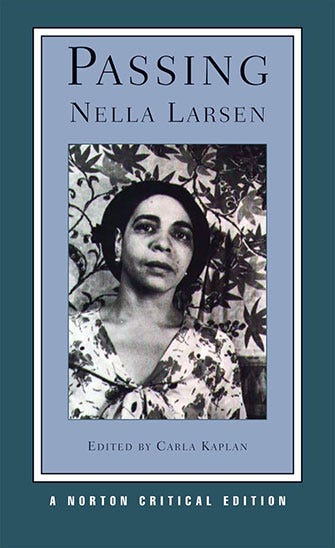
The two title characters in Passing, Irene and Clare, both deal with intersectionality. As African American women, they are faced with the question of how to succeed against oppression due to race and gender. Each woman takes a different approach.
Irene opts to marry a Black man who is a doctor and become involved in activism to support her race. Her husband is limited in his practice due to the color of his skin, but is at the height of possibility for a Black man. Irene has embraced her racial identity and considers herself successful in that she has gone as far as a woman of color can go on the social scale.
Clare decides to “pass” as white. She has a lighter skin color and it is not obvious to others that she is African American. Clare is married to a white man, which furthers the possibility of “passing”. Her contemporaries would have never found an interracial marriage acceptable. Because of events in Clare’s past, her husband doesn’t know she is black. By “passing”, Clare is afforded the luxuries that white women enjoy.
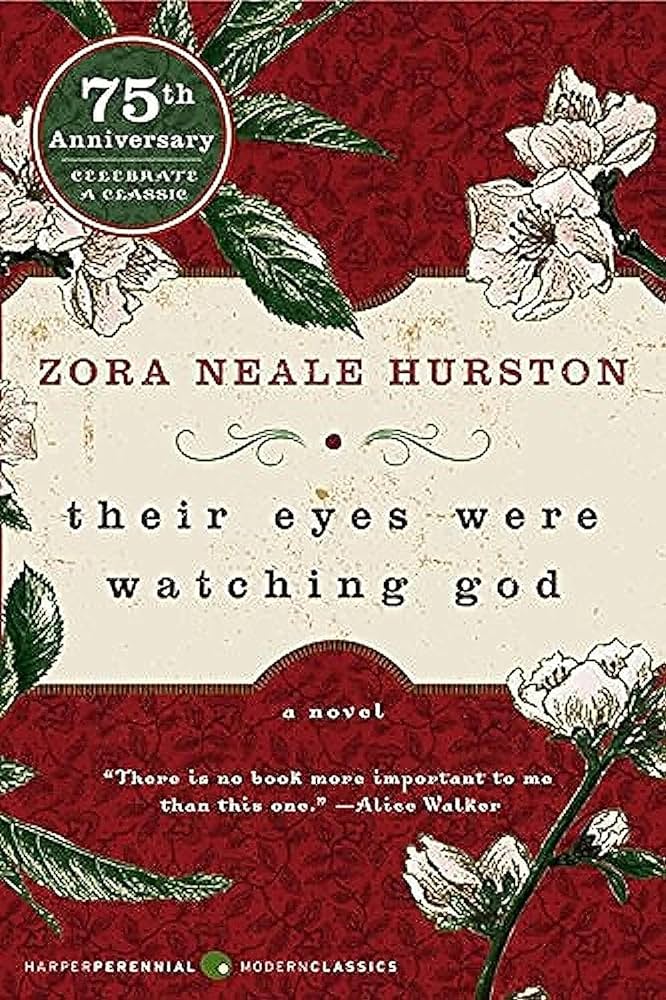
In Their Eyes Were Watching God, title character Janie has feminist desires. She wishes to engage in behaviors women, especially women of color such as herself, were not permitted to perform by their husbands during the time of publication of the novel, 1937. Janie wants to be invited to do things such as: public speaking, working, taking part in community events, and playing checkers.
Janie enters three marriages. With each marriage she has the hope that her husband will support her in her desires. Her first two spouses are abusive and controlling, denying her the right to partake in any of the typically male activities. Her third husband, Tea Cake, teaches Janie to play checkers and invites her to play with him. He encourages her to work in the field with him and invites her to the late night parties after the workdays. He even teaches Janie to shoot a gun. Tea Cake is also abusive financially, physically, and emotionally, but Janie considers herself fulfilled as a woman regardless.
Women throughout history have been forced to make, often horrible, decisions to further themselves to a top that is still lower than what men can easily achieve. Intersectionality asks that we consider all factors of identity when viewing oppression. African American women face different levels of oppression than Caucasian women, as do other multi-layered minority women. This does not diminish the level of oppression experienced by white women, as racial identity is only one, among many, factors. Other minority factors include, but are not limited to, sexual identity, social class, age, health status, education, etc.
1Crenshaw, Kimberle. “Intersectionality and Identity Politics: Learning from Violence against Women of Color.” Feminist Theory: A Reader, edited by Wendy K. Kolmar and Frances Bartkowski, 4th Edition, McGraw-Hill, 2013, p. 485.
 Changing Societal Views of Femininity as Shown in Literature